
Orphaned Equipment Management
Sustaining medical equipment beyond OEM parts and support — the hardest problem in African biomedical engineering.
When the manufacturer stops answering the phone and the last spare part ships from the warehouse, the equipment does not stop treating patients. It just stops having a service plan.
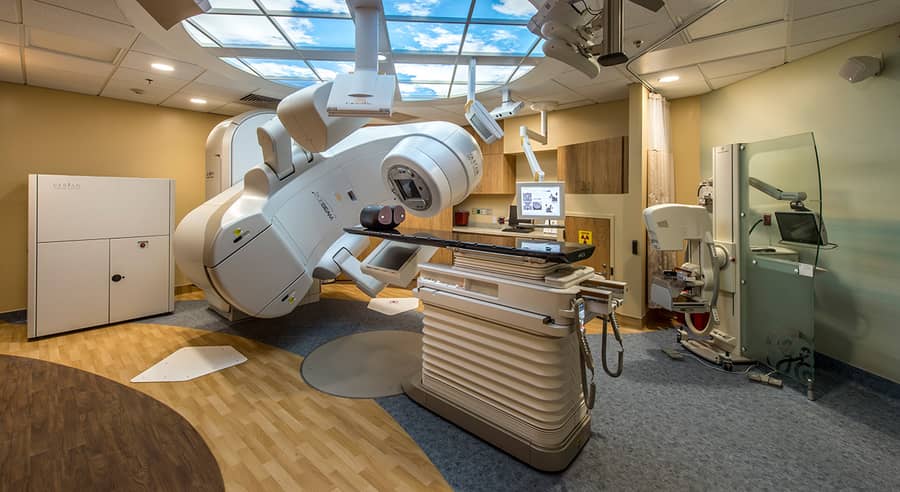
Orphaned medical equipment — systems where the original manufacturer has discontinued spare parts supply and technical support — is the fastest-growing challenge in African hospital biomedical engineering. Equipment installed in the 2000s and early 2010s is entering or passing its OEM support window across every category: radiotherapy linacs (Varian Clinac series, Elekta Precise), patient monitors (Philips IntelliVue MP-series legacy platforms), haematology analysers (Beckman Coulter Act 5diff, HORIBA ABX Micros), CSSD autoclaves (Getinge 900-series, MMM Melag 40B/41B), and ICU ventilators across multiple manufacturers. Jos•Hansen addresses this through four parallel capabilities: alternative parts sourcing from specialist distributors and decommissioned-equipment salvage networks in Europe and the USA; custom maintenance protocol development using OEM service documentation secured before discontinuation; in-house reverse engineering for components where no alternative source exists; and structured training programmes that build the local biomedical engineering capacity to sustain these systems independently between Jos•Hansen service visits.
Alternative parts sourcing for discontinued OEM lines
Jos•Hansen's international procurement network includes IMES Medical (Germany), Radparts (USA) and multiple European medical equipment salvage operations that recover serviceable components from decommissioned hospital equipment. For Varian Clinac radiotherapy systems no longer supported by Varian Medical Systems, for legacy Philips IntelliVue monitor sensor modules, for Beckman Coulter haematology analyser optical components — Jos•Hansen can source alternative parts that restore clinical function without OEM supply. All alternative parts are evaluated against OEM performance specifications before installation, with documented performance verification.
Custom maintenance protocols from secured OEM documentation
Before an OEM discontinues support, Jos•Hansen systematically secures all available technical documentation: service manuals, field service guides, software diagnostic tools, calibration procedure documents and parts catalogues. This documentation library underpins custom maintenance protocols that allow Jos•Hansen engineers to maintain orphaned equipment to a defined and repeatable standard — even when the OEM no longer provides field service support or training. For equipment categories where we have been the service partner for decades, our institutional knowledge extends beyond the documentation: engineer experience, failure pattern records and validated workaround procedures that cannot be found in any manual.
Local biomedical engineer training — sustainability built in
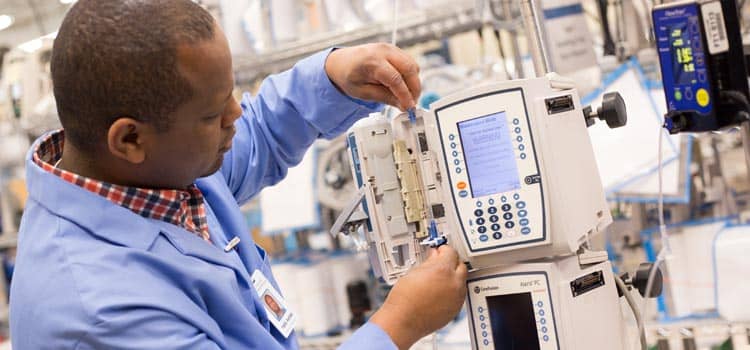
The fundamental limitation of any external service partner is response time and cost. A hospital biomedical engineer who can perform Tier 1 and Tier 2 maintenance on their own orphaned equipment — replacing consumable components, running diagnostic routines, applying calibration procedures — reduces the frequency of Jos•Hansen callouts and extends equipment operational life between visits. Jos•Hansen designs its orphaned equipment programmes to build this in-hospital capacity deliberately: formal training in equipment maintenance, written procedure guides adapted to local context, and remote technical support access. Sustainability is not a side benefit — it is the design goal.
The scale of the orphaned equipment problem across African hospitals.
WHO studies estimate that 40–80% of medical equipment in African hospitals is donated or purchased from high-income countries at the end of its primary service life — arriving with no service documentation, no local parts supply chain and no trained service engineers. This equipment enters service, works for 2–5 years, then joins the orphaned equipment category when its first significant failure occurs. Hospitals that paid for equipment through government tenders or donor grants have no budget line for parts — because no budget line was created at the time of procurement. The result is clinical departments managing around broken equipment: using manual techniques where automated measurement should be standard, improvising workarounds that introduce clinical risk, or simply withdrawing services when equipment fails. Jos•Hansen's orphaned equipment programme is a direct response to this reality — not a premium service for well-resourced hospitals, but a core part of our African health system mandate.
Reverse engineering for critical components with no available alternative.
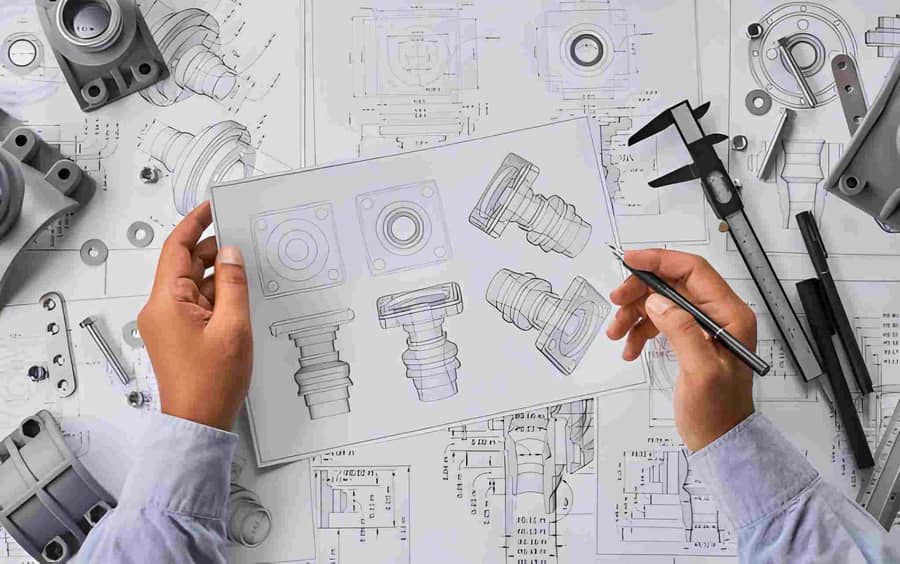
Some critical components for orphaned medical equipment have no available source — the OEM has discontinued them, no alternative manufacturer produces an equivalent, and no salvage network holds them. For these components, Jos•Hansen engineers assess whether reverse engineering is technically feasible and clinically appropriate. Mechanical components — gantry counterbalance springs, collimator mounting assemblies, table column seals — can frequently be reverse-engineered to OEM specification by precision engineering workshops in Nairobi with whom Jos•Hansen maintains long-standing relationships. Electronic circuit boards with failed components can often be repaired at component level. For dosimetric and measurement-critical components, reverse engineering is only approved when the refabricated part can be validated against OEM performance specifications — because clinical safety cannot be inferred, only measured.
Jos•Hansen's institutional continuity — equipment support across decades.
Jos•Hansen has operated continuously in East Africa since 1919 — over 105 years. In that time, we have supported equipment through multiple OEM generations, multiple OEM acquisitions and mergers, and the complete withdrawal of multiple manufacturers from the African market. When Siemens Medical divided into Siemens Healthineers, when Varian Medical Systems was acquired by Siemens Healthineers, when Philips restructured its healthcare division — the service engineers in our workshops and the documentation in our library remained continuous. This institutional continuity is the intangible that cannot be replicated by a newly formed service company: the accumulated knowledge of how specific equipment behaves in East African conditions, which failure modes appear first, which workaround procedures are safe and which are not, and which parts are worth importing and which are better reverse-engineered locally. It is 105 years of institutional memory, and it keeps equipment running when nothing else does.
Technical specifications.
Alternative parts sourcing
IMES Medical (Germany) · Radparts (USA) · European salvage networks · in-house reverse engineering
Documentation library
OEM service manuals · calibration procedures · software diagnostic tools secured before discontinuation
Equipment categories
Radiotherapy linacs · patient monitors · haematology analysers · CSSD autoclaves · ICU ventilators
OEM examples
Varian Clinac · Elekta Precise · Philips IntelliVue legacy · Beckman Coulter ABX · Getinge CSSD
Local capacity building
Formal training + written procedure guides + remote support access for hospital biomedical staff
Jos•Hansen operational history
Est. 1919 — 105+ years continuous East Africa operations
Of medical equipment in African hospitals estimated to be donated or procured secondhand at or near end of primary service life — the primary driver of orphaned equipment volume
Jos•Hansen's continuous operational history in East Africa — institutional knowledge of equipment performance, failure patterns and local service conditions built over a century
Additional operational life achieved for orphaned equipment under Jos•Hansen management programmes — equipment sustained beyond OEM support end using alternative parts and custom protocols
Why Orphaned.
105 years of institutional knowledge
No other service partner in East Africa has Jos•Hansen's continuity — 105 years of equipment knowledge, failure pattern records and validated maintenance procedures that cannot be found in any manual.
10+ years beyond OEM support
We have sustained equipment for 10+ years beyond OEM parts and support discontinuation — through alternative parts, custom protocols and in-house reverse engineering.
Custom protocols from secured documentation
Pre-discontinuation OEM documentation library enables maintenance to a defined, repeatable standard — even when the OEM no longer provides field service or training.
Local capacity building built in
Training, written procedure guides and remote support access build in-hospital biomedical capacity — reducing Jos•Hansen callout frequency and making equipment sustainability self-reinforcing.
Related products.


Partner with Jos Hansen
Talk to our procurement and operations teams about your next infrastructure, healthcare or scientific deployment.