
Patient Monitors
Continuous multiparameter bedside monitoring — ECG, SpO2, NIBP, EtCO2 and invasive pressures.
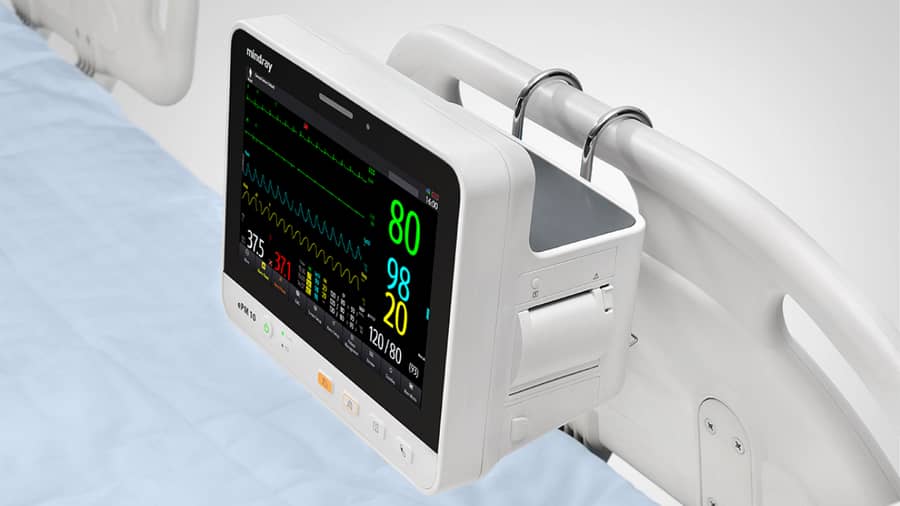
Clinical deterioration happens continuously and silently. A patient monitor that alarms late is a patient monitor that fails its primary purpose.
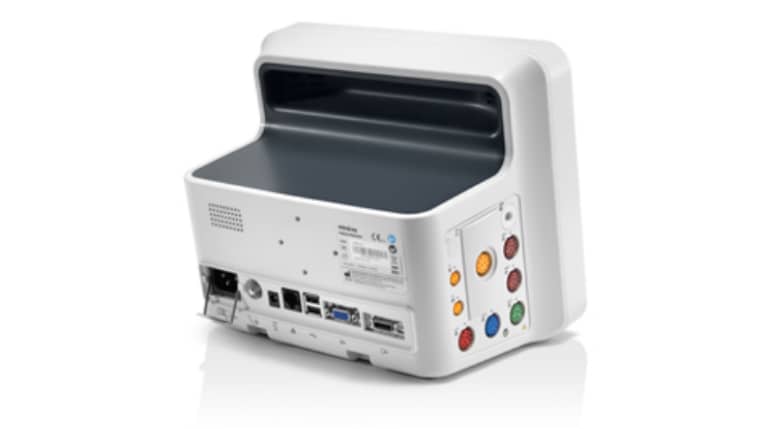
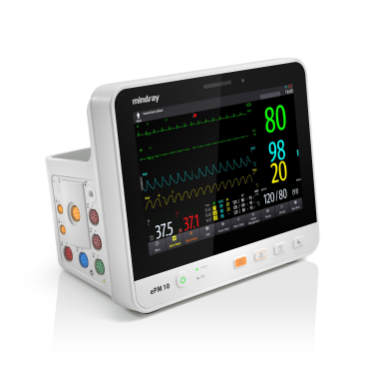
Mindray BeneView T and ePM series bedside patient monitors deliver continuous multiparameter surveillance across ECG (12-lead capable), SpO2, non-invasive blood pressure (NIBP), temperature, end-tidal CO2 (EtCO2), and dual-channel invasive arterial and central venous pressure monitoring. Networked to the Mindray CentralStation for ward-wide patient surveillance from a single screen, the ePM and BeneView platforms cover ICU, HDU, surgical recovery, general ward and step-down unit deployments across African hospital environments. Intelligent alarm management with configurable delay, priority escalation and nurse call integration reduces alarm fatigue — one of the leading causes of missed clinical deterioration in under-staffed wards. Jos•Hansen supplies, installs, trains and maintains Mindray patient monitors across East and Southern Africa with in-country spare parts and calibration support.
Multiparameter surveillance
ECG with ST-segment analysis, SpO2 with plethysmography waveform, automated NIBP cycles, core temperature, EtCO2 capnography and dual invasive pressure channels — all displayed simultaneously on a single screen. Every parameter required for ICU patient management, from ventilated patients to postoperative monitoring, available without additional standalone devices at the bedside.
Central station and ward network
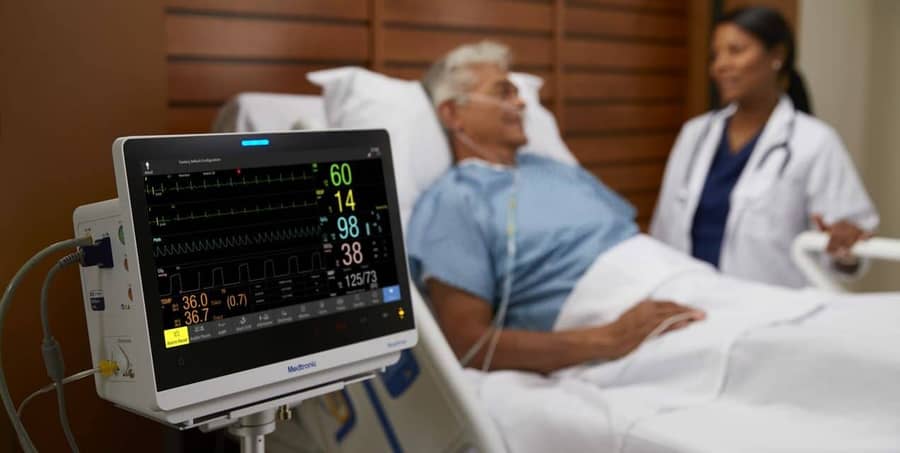
Mindray CentralStation receives simultaneous data from all networked bedside monitors — displaying every active patient's waveforms, alarm status and trends on a single central screen. The charge nurse can monitor the full ICU or HDU without moving between bedsides. Remote alarm acknowledgement, trend review, and patient record export to EMR are supported from the central station.
Intelligent alarm management
Configurable alarm thresholds with delay settings, priority escalation tiers and nurse call integration reduce alarm fatigue — the condition where clinical staff begin ignoring alarms because the false alarm rate is too high. Mindray's smart alarm algorithms analyse alarm patterns and suppress non-actionable alerts while preserving detection of genuine deterioration events.
The case for continuous monitoring — what unmonitored deterioration costs.
Failure to rescue — the inability to detect and respond to clinical deterioration in a hospitalised patient before it becomes cardiac arrest — is a leading cause of preventable in-hospital mortality. Studies show that 70% of in-hospital cardiac arrests are preceded by detectable physiological changes in the 6–8 hours before arrest. In African hospitals, where patient-to-nurse ratios are frequently 1:10 or higher and clinical observations are intermittent, continuous electronic monitoring is the only practical way to detect the SpO2 desaturation, blood pressure fall, heart rate change or respiratory rate change that signals impending deterioration. Mindray patient monitors with configurable alarm thresholds provide this surveillance at every bedside — not only in the ICU but in HDU, step-down and high-dependency ward environments where monitoring is equally critical and often absent.
EtCO2 capnography — the ventilation parameter most ICUs are missing.
End-tidal CO2 monitoring (capnography) measures the CO2 concentration in exhaled breath — providing real-time confirmation of endotracheal tube position, a continuous surrogate for arterial PaCO2 and a non-invasive guide to ventilation adequacy and cardiac output. In intubated patients, capnography immediately detects tube displacement (EtCO2 falls to zero), hyperventilation (EtCO2 below 35 mmHg) and hypoventilation (EtCO2 above 45 mmHg) — clinical events that cause secondary brain injury in head trauma patients, haemodynamic instability in post-operative patients and respiratory failure progression in ARDS. Despite its clinical value, EtCO2 monitoring is absent from most African ICUs — primarily because it is not available on the basic patient monitors deployed. Mindray ePM and BeneView platforms with EtCO2 modules bring capnography-capable monitoring within the budget of African hospital procurement.
Invasive arterial monitoring — beat-to-beat haemodynamic management.
Invasive arterial pressure (IAP) monitoring via radial or femoral arterial line provides beat-to-beat blood pressure measurement — essential for haemodynamically unstable patients in septic shock, cardiogenic shock, major trauma and post-cardiac surgery where NIBP cycling is too slow to detect rapid pressure changes. The arterial pressure waveform also provides pulse pressure variation — the dynamic parameter that predicts fluid responsiveness in ventilated patients with greater accuracy than static CVP measurement. Central venous pressure (CVP) measurement via the second invasive pressure channel completes the haemodynamic picture for ICU patients on vasopressors and fluid resuscitation protocols. Both channels are standard on Mindray BeneView T ICU monitors — delivered, installed and calibrated by Jos•Hansen.
Technical specifications.
ECG
3/5/12-lead · ST analysis · arrhythmia detection
SpO2
Nellcor or Masimo compatible · pleth waveform
NIBP
Oscillometric · manual · auto-cycle · stat mode
EtCO2
Mainstream and sidestream capnography module
Invasive pressure
2× IBP channels (arterial · CVP · PAP compatible)
Connectivity
Mindray CentralStation · HL7 EMR integration · 4-hour battery
Of in-hospital cardiac arrests preceded by detectable physiological deterioration in the 6–8 hours before arrest — the window continuous monitoring is designed to capture
Typical patient-to-nurse ratio in African hospital wards — making continuous electronic monitoring and central station surveillance essential to detect deterioration between manual observations
Simultaneous parameters on a single Mindray bedside monitor — ECG, SpO2, NIBP, temperature, EtCO2 and invasive pressure — without requiring additional standalone devices
Why Patient.
6-parameter bedside surveillance
ECG with ST analysis, SpO2, NIBP, temperature, EtCO2 capnography and dual invasive pressure channels — complete ICU monitoring without additional standalone devices at the bedside.
CentralStation ward network
Mindray CentralStation displays simultaneous waveforms and alarms from all networked bedside monitors — enabling ward-wide deterioration surveillance from a single nursing screen.
Smart alarm management
Configurable alarm thresholds, delay settings, priority escalation and nurse call integration reduce alarm fatigue while preserving detection of genuine deterioration events.
In-country service and parts
Jos•Hansen supplies, installs, trains, calibrates and maintains Mindray monitors across East Africa — with local spare parts inventory and PPM at OEM-specified intervals.
Partner with Jos Hansen
Talk to our procurement and operations teams about your next infrastructure, healthcare or scientific deployment.