
ICU Ventilators
Full-mode mechanical ventilation for acute respiratory failure, weaning and non-invasive support.
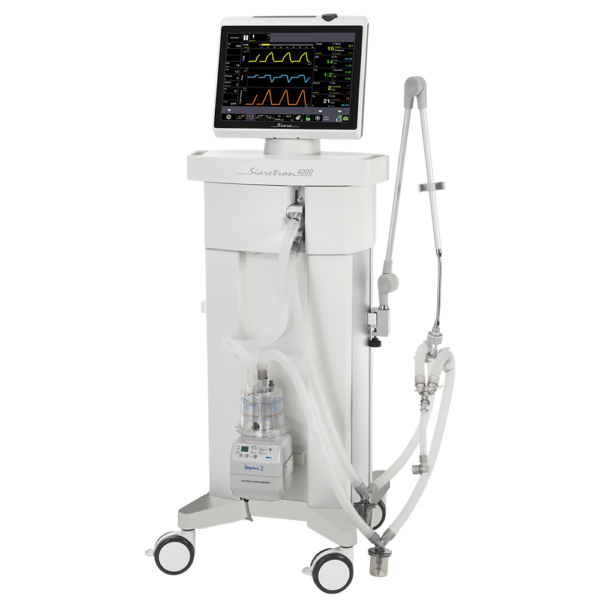
Mechanical ventilation buys time. Time for the lung to recover, for the treatment to work, for the patient to survive. The ventilator must not fail.
Siare Engineering (Italy) ICU ventilators deliver comprehensive invasive and non-invasive ventilation across all acuity levels — volume-controlled (VCV), pressure-controlled (PCV), SIMV, pressure support (PSV), CPAP and NPPV modes with fully adjustable parameters and real-time flow, pressure and volume waveform display. Built to perform in African ICU environments where grid power is unstable, service response is slow and utilisation rates are high: internal battery backup sustains ventilation through power interruptions, auto-restart after outage restores therapy without clinician intervention, and robust construction tolerates the continuous high-use conditions of under-resourced units. Jos•Hansen supplies, installs, commissions, trains clinical staff and provides ongoing preventive maintenance and spare parts for all Siare platforms across East and Southern Africa.
Complete mode coverage
VCV, PCV, SIMV, PSV, CPAP and NPPV from one platform — covering acute respiratory failure requiring full control ventilation, lung-protective strategies for ARDS, synchronised weaning with SIMV and PSV, and non-invasive support for the spontaneously breathing patient who needs pressure assistance but not intubation.
Real-time waveform monitoring
Continuous display of flow, pressure and volume scalar waveforms with pressure-volume and flow-volume loops enables ICU clinicians to identify dyssynchrony, assess lung mechanics, optimise PEEP and detect auto-PEEP in real time — the ventilator management tools that reduce ventilator-induced lung injury and time on mechanical support.
Power-resilient operation
Internal battery backup sustains ventilation for up to 4 hours during power outages. Auto-restart after power interruption restores previous ventilator settings without requiring clinician input — critical in African ICUs where power interruptions occur without warning and a nurse may not be at the bedside when power returns.
The ventilator crisis in African ICUs — and why reliability is the primary specification.
Sub-Saharan Africa has approximately 0.7 ICU beds per 100,000 population versus 34 in high-income countries. The ventilators that exist are frequently out of service — not because of terminal failure, but because of spare parts unavailability, lack of preventive maintenance and the absence of trained biomedical engineers to respond to faults. A ventilator that fails during a patient's night ventilation shift, in a hospital without backup equipment, is fatal. The primary specification for an African ICU ventilator is not feature count — it is reliability, power resilience and the existence of a local service partner capable of maintaining it. Siare Engineering platforms are built to IEC 60601-1 with demonstrated reliability in tropical and variable-power environments. Jos•Hansen provides the service infrastructure that keeps them running.
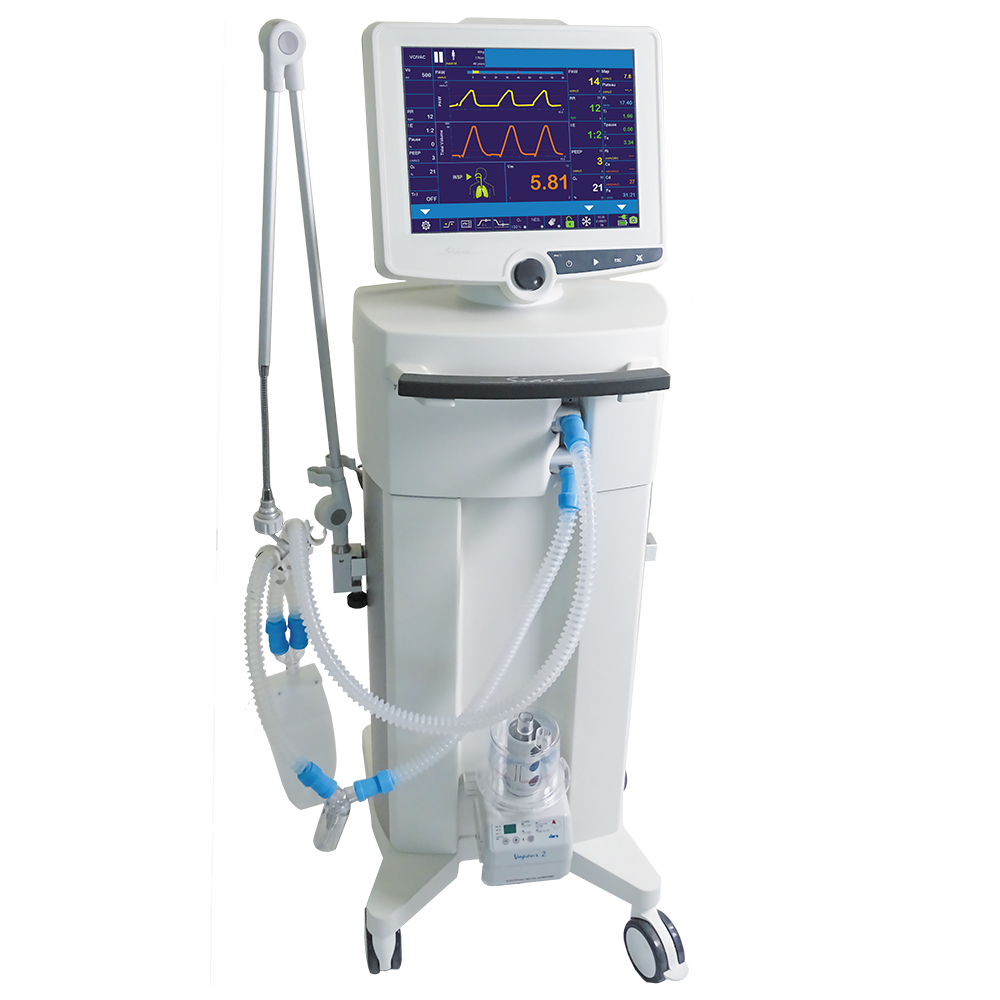
Lung-protective ventilation and ARDS management in resource-limited settings.
Acute respiratory distress syndrome (ARDS) — triggered by sepsis, pneumonia (including COVID-19 and tuberculosis), trauma and aspiration — carries mortality rates of 35–46% in African ICUs. Lung-protective ventilation (tidal volumes of 6 mL/kg predicted body weight, plateau pressures below 30 cmH₂O, appropriate PEEP titration) is the only ventilation strategy with proven mortality benefit in ARDS. Siare ventilators display the parameters required for lung-protective ventilation — real-time tidal volume, peak and plateau pressure measurement, and PEEP adjustment — with alarms configured to prevent breach of protective thresholds. The driving pressure calculation (plateau pressure minus PEEP) required for advanced ARDS management is available from the displayed waveform parameters.
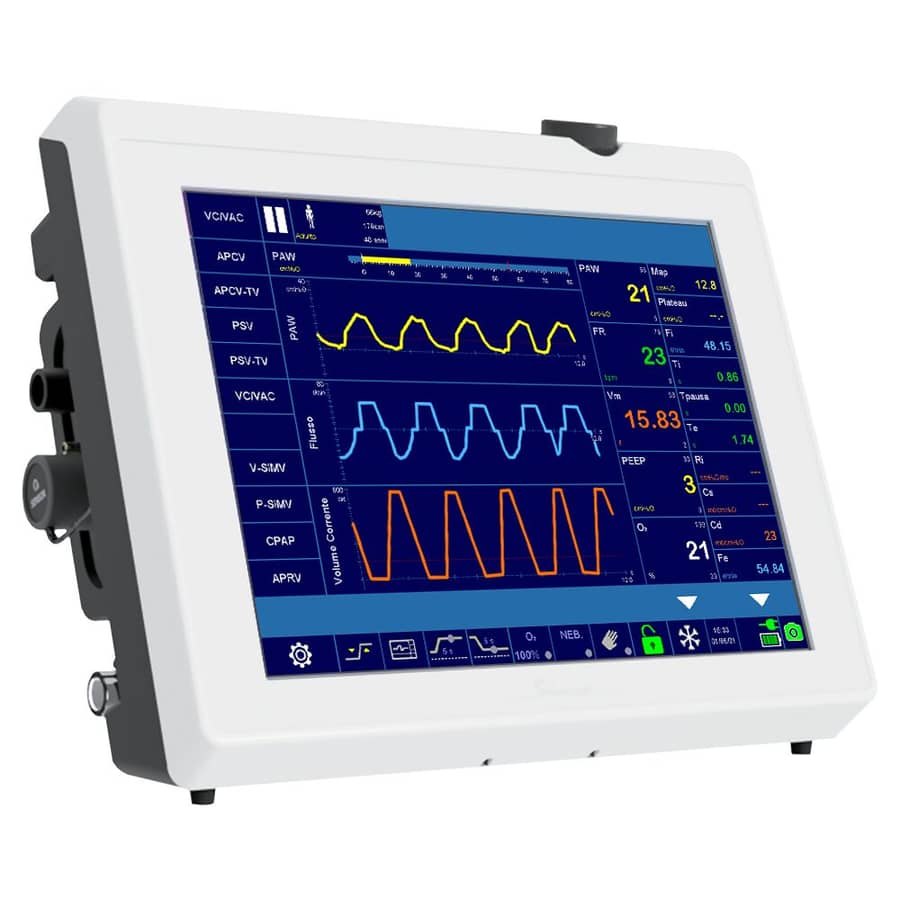
Clinical training, PPM and spare parts — Jos•Hansen's commitment beyond delivery.
Delivering a ventilator to an ICU without training, maintenance and parts is not a complete solution. Jos•Hansen provides structured clinical training for ICU nurses and doctors at installation — covering mode selection, alarm response, circuit management and weaning protocols. Preventive maintenance visits are scheduled at manufacturer-specified intervals, with performance verification, circuit testing, flow sensor calibration and battery capacity testing. A local spare parts inventory covers the most frequently replaced components — flow sensors, inspiratory and expiratory valves, breathing circuit connectors — with emergency parts airfreighted within 48–72 hours for critical failures. One service agreement covers the full support lifecycle.
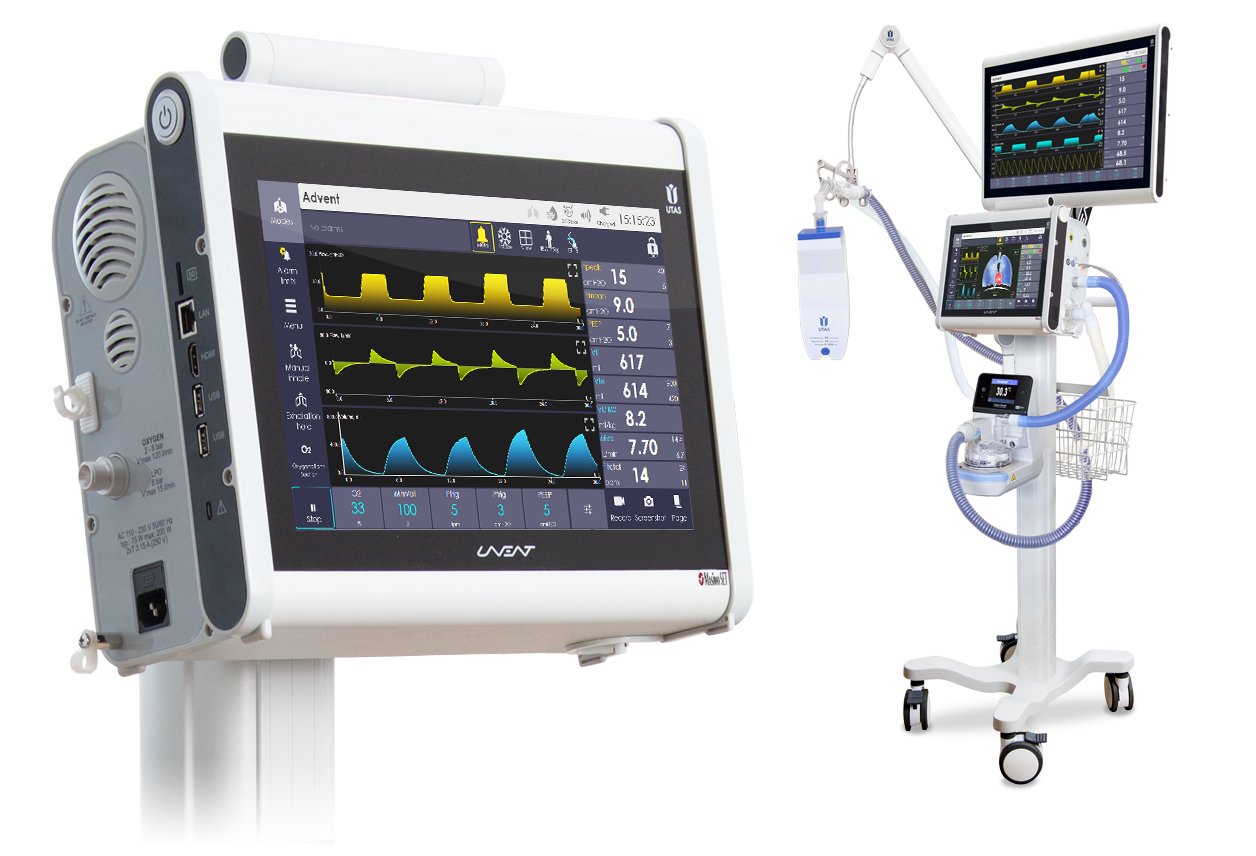
Technical specifications.
Ventilation modes
VCV · PCV · SIMV · PSV · CPAP · NPPV · PC-SIMV
Tidal volume range
50–2,500 mL
FiO2 range
21–100% (air/O2 blender)
PEEP range
0–30 cmH₂O
Display
15" colour touchscreen · scalar waveforms · P-V and F-V loops
Power resilience
Internal battery · 4-hour backup · auto-restart after outage · IEC 60601-1
ICU beds per 100,000 population in sub-Saharan Africa — versus 34 in high-income countries — making every ventilator's reliability and uptime clinically critical
ARDS mortality in African ICUs — managed with lung-protective ventilation strategies requiring real-time tidal volume, plateau pressure and PEEP monitoring
Internal battery backup duration — sustaining mechanical ventilation through power outages without requiring clinician intervention to restart therapy
Why ICU.
Full invasive and NIV modes
VCV, PCV, SIMV, PSV, CPAP and NPPV cover every clinical scenario from acute respiratory failure requiring full control to weaning patients and supporting spontaneous breathing with pressure assistance.
Real-time lung mechanics
Scalar waveforms and P-V/F-V loops enable ICU clinicians to detect dyssynchrony, assess compliance, optimise PEEP and identify auto-PEEP — the monitoring tools that reduce ventilator-induced lung injury.
Power-resilient design
4-hour battery backup and auto-restart after power interruption — sustaining ventilation through the unpredictable grid outages common across East African hospital infrastructure.
Training, PPM and parts
Jos•Hansen provides clinical training at installation, preventive maintenance at OEM-specified intervals, local spare parts inventory and emergency part airfreight — the full service lifecycle in one agreement.
Partner with Jos Hansen
Talk to our procurement and operations teams about your next infrastructure, healthcare or scientific deployment.