
Nebulizers
Precision aerosol drug delivery for bronchodilation, antibiotic therapy and steroid treatment.
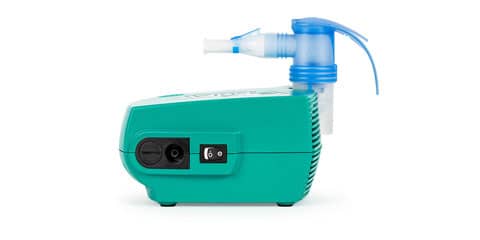
Inhaled drug therapy is only effective if the drug reaches the airways. Particle size, flow rate and device efficiency determine whether the treatment works.
PARI and Philips Respironics nebulizer systems — jet, ultrasonic and vibrating mesh — deliver bronchodilators, inhaled antibiotics, corticosteroids and mucolytics to the small airways of ICU, paediatric, respiratory ward and outpatient patients. PARI TURBO BOY and Philips InnoSpire mesh systems generate particles in the 1–5 μm mass median aerodynamic diameter (MMAD) range required for deep lung deposition, with drug delivery efficiency superior to conventional jet nebulizers and output particle size validated against ERS/ISAM standards. Silent vibrating mesh technology enables nebulization in ICU settings without the compressor noise that disturbs critically ill patients or drowns out monitor alarms. Jos•Hansen supplies nebulizer systems, replacement chambers, medication cups, masks and compressors — with local technical support and consumable replenishment across East Africa.
1–5 μm deep lung deposition
Particles larger than 5 μm deposit in the oropharynx and upper airway — not the bronchi where bronchodilators act or the alveoli where antibiotics must reach. PARI and Philips mesh nebulizers generate output with MMAD consistently in the 1–5 μm therapeutic range — validated against ERS/ISAM standards — maximising the fraction of dose that reaches the intended site of action in the small airways.
Silent vibrating mesh for ICU use
Conventional jet nebulizers require a compressor that generates 50–60 dB of noise — equivalent to a normal conversation held continuously at the bedside. In an ICU where patient monitors, ventilator alarms and infusion pump alerts must be audible, compressor noise creates an unsafe acoustic environment. Vibrating mesh nebulizers operate without a compressor — delivering medication silently, without interfering with monitor or ventilator alarm audibility, and without disturbing the rest of critically ill patients.
Ventilator circuit integration
Intubated ICU patients receiving mechanical ventilation require in-line nebulization — medication added directly to the ventilator circuit during ventilation rather than via a face mask. PARI and Philips nebulizer systems are compatible with standard ventilator inspiratory limb integration — delivering medication during the inspiratory phase without interrupting mechanical ventilation, disconnecting the circuit or altering ventilator settings.
The respiratory disease burden in African ICUs — why nebulizers are a core ICU device.
Respiratory conditions account for approximately 30–40% of ICU admissions across sub-Saharan Africa — driven by severe community-acquired pneumonia, tuberculosis with respiratory failure, asthma exacerbations, COPD and COVID-19. Bronchodilator nebulization (salbutamol, ipratropium) is the first-line aerosol treatment for acute bronchospasm in all of these conditions. Inhaled antibiotic therapy (tobramycin, colistin) is increasingly used for ventilator-associated pneumonia caused by resistant Gram-negative organisms — reducing systemic drug exposure while achieving high local airway concentrations. Inhaled corticosteroids (budesonide) are used for post-extubation stridor and inflammatory airway conditions. A nebulizer is required to deliver all of these treatments to a patient who cannot reliably use a metered-dose inhaler — including ICU patients, the elderly, children and patients in acute distress.
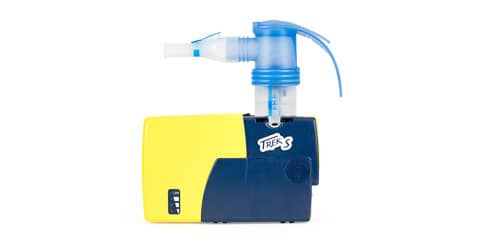
Paediatric aerosol therapy — particle size and mask fit determine dose.
Children breathe at lower flow rates and tidal volumes than adults — meaning the device and flow settings that generate a therapeutically effective particle size in an adult produce a different, often larger, particle size in a child. PARI BABY and Philips paediatric nebulizer chambers are designed with the lower flow rates, smaller medication volumes and child-appropriate mask sizes that optimise bronchodilator deposition in neonatal, infant and paediatric airways. In African paediatric wards and NICUs, where acute bronchiolitis, asthma and pertussis create high demand for nebulized therapy, paediatric-specific nebulizer chambers and age-appropriate masks are not optional additions — they are the standard of care. Jos•Hansen supplies complete paediatric nebulizer kits including neonatal, infant and child mask sizes with replacement chambers for ongoing clinical use.
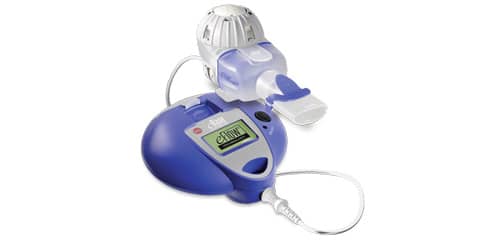
Consumable supply and compressor maintenance — the hidden dependencies of nebulizer therapy.
A nebulizer chamber has a finite service life — typically 50–100 uses before drug delivery efficiency degrades below the clinical threshold. A compressor with a failing motor delivers inadequate flow rates, generating larger particles with reduced distal deposition. Masks that crack or seal improperly waste medication to the environment rather than delivering it to the patient. These consumable failures are invisible without regular inspection — but they mean the patient is receiving a fraction of the prescribed dose without clinical awareness. Jos•Hansen maintains in-country stock of replacement PARI and Philips chambers, medication cups, masks and compressor filters — with standing supply agreements and rapid delivery to prevent the consumable stock-outs that reduce nebulizer therapy to ineffective aerosol generation.
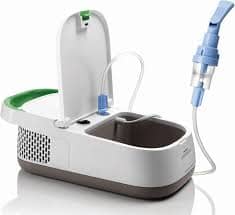
Technical specifications.
Technology
Jet (compressor) · ultrasonic · vibrating mesh
Particle size (MMAD)
1.0–5.0 μm — validated against ERS/ISAM standards
Drug compatibility
Bronchodilators · inhaled antibiotics · steroids · mucolytics · saline
ICU integration
In-line ventilator circuit nebulization compatible
Paediatric range
Neonatal · infant · child mask sizes · low-flow chambers
Power
Mains (compressor) · USB (mesh) · battery option
Of sub-Saharan African ICU admissions attributable to respiratory conditions — bronchospasm, pneumonia, TB and COPD — where nebulized bronchodilator and antibiotic therapy is a core treatment
MMAD therapeutic particle size range for deep bronchial and alveolar drug deposition — the specification that separates effective aerosol therapy from oral pharyngeal dropout
Compressor noise from vibrating mesh nebulizers — silent operation in ICU settings where compressor noise drowns monitor alarms and disturbs critically ill patient rest
Why Nebulizers.
Deep lung particle delivery
1–5 μm MMAD output validated against ERS/ISAM standards — maximising the drug fraction that reaches the bronchi and alveoli where bronchodilators and antibiotics must act.
Silent ICU-compatible mesh
Vibrating mesh technology delivers aerosol without a compressor — no noise interference with monitor alarms, no acoustic disruption to critically ill patients.
Full paediatric range
PARI BABY and Philips paediatric chambers with neonatal, infant and child mask sizes — optimised flow rates and particle size for bronchodilator delivery in smaller airways.
Consumable supply chain
Jos•Hansen maintains in-country stock of replacement chambers, medication cups, masks and compressor filters — with standing supply agreements and rapid East Africa delivery.
Partner with Jos Hansen
Talk to our procurement and operations teams about your next infrastructure, healthcare or scientific deployment.